
Sharing is caring!
Lent Pretzel Science Activity for Families
During Lent, we simplify our meals. Traditionally, Catholics fasted on bread and water. The pretzel was developed to give Catholics a simple recipe to make for Lent. Today, I will share a fun Lent pretzel science activity which includes my favorite pretzel recipe and an acids and bases activity that you can do in your kiitchen!
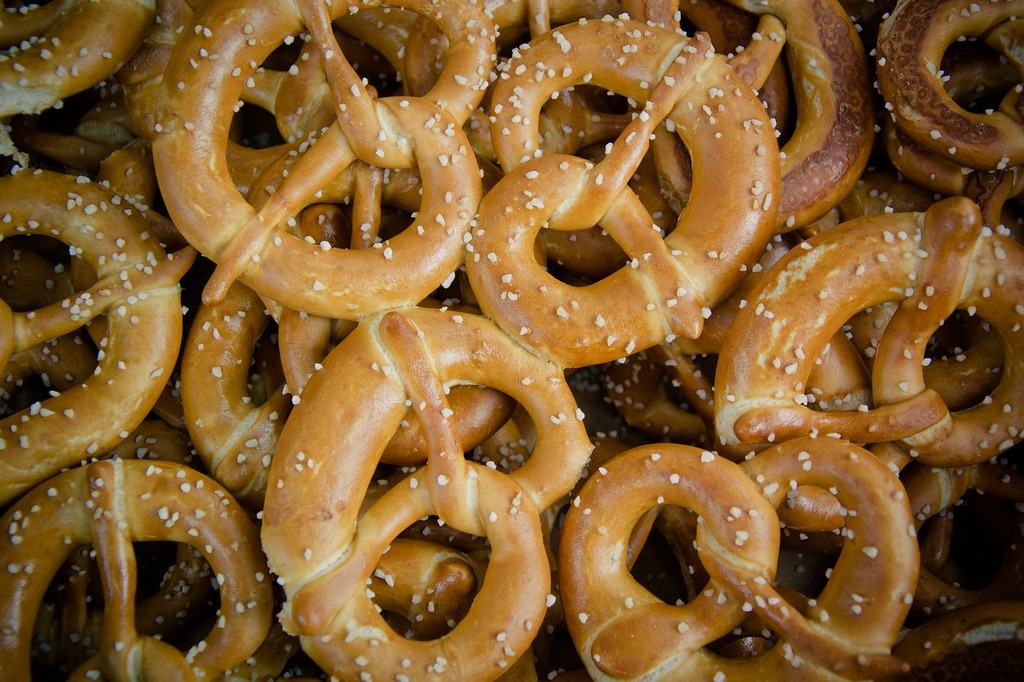
Why are pretzels often baked during Lent?
During the time of the Roman Empire, Christians were very strict about their Lenten fasting practices.
ngredients such as milk, butter, cream, eggs, and meat were strictly avoided during Lent, and recipes for bread did not include these ingredients. Bread recipes were made simply with flour, salt, and water.
In those days, people used to pray with their arms crossed over their chest. So, they made bread in this shape to remind people that Lent is a time of prayer. The breads were called “bracellae” which is Latin for “little arms.” This word was later turned into the word pretzel by the Germanic people.
You can read more about the history of the Lenten pretzel here.
How to Make Soft Pretzels
There are 4 simple steps for making soft pretzels shaped in the traditional twisted shape. Pretzel ingredients are similar to the ingredients found in bread (yeast, water, sugar, flour), but there is no rising time to wait around for.
The 5 steps for making pretzels are:
- Mix pretzel ingredients
- Allow the ingredient to rest
- Shape the pretzels
- Boil the pretzels for 20-30 seconds in a baking soda bath
- Bake pretzels and enjoy!
We love using this soft pretzel recipe. It’s pretty simple, the dough is easy for little hands to work with, and they come out delicious. The pretzels also freeze and thaw well. So, we usually double or triple the recipe to have plenty of pretzels for our family throughout lent.
Why do we have to soak our pretzel in a baking soda bath?
The baking soda bath is key to the lovely brown exterior that will show up on your pretzel during baking and give the pretzel its yummy taste. The same process is used for making bagels.
The Maillard Reaction
The Maillard reaction is the official name for this process. In this process, a chemical reaction occurs between the amino acid group on the protein in the flour and sugar (which is included in the bread recipe).
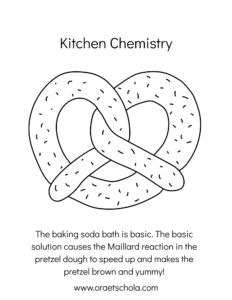
The baking soda bath is basic (more on acids and bases in a moment), and the basic solution speeds up the Maillard reaction. Bakers and chemists actually have a lot in common!
If you have some chemistry background, you can read more about this process here.
Simple Explanation of Acids and Bases
The Maillard reaction takes some background in biochemistry and organic chemistry to understand. In our kitchen, though, we can observe the simple properties of acids and bases. We can also define acids and bases for our children.
Acids and Bases in the Kitchen
Acids and bases are all around us. Lots of recipes (such as our pretzel recipe) even depend on the mixing of acids and bases!
When an acid and a base mix, a chemical reaction occurs. You may observe bubbles or maybe even feel the mixture become a little warm. These observations are both evidence that a chemical reaction has occurred.
When an acid and a base mix, they form water and a salt. Sometimes a gas is also formed.
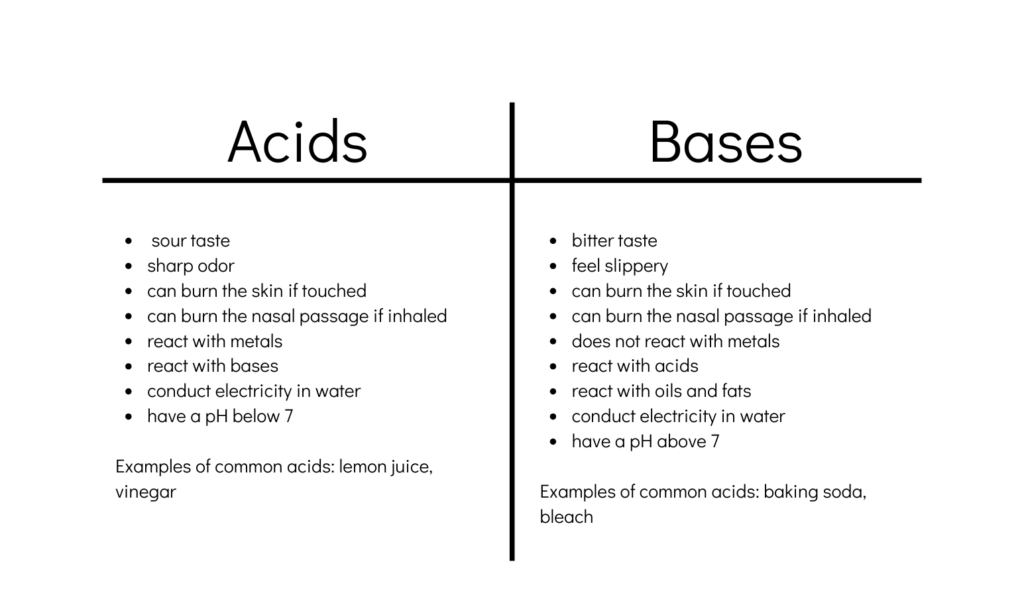
Here are some characteristics of acids and bases:
Simple Acid-Base Activity
Here is a simple activity to observe the chemical reaction between acids and bases (or, lack of a reaction between neutral substances and acids/bases).
Purpose: To determine which substances react with vinegar, and to determine which substances are bases.
Materials:
- an egg carton
- salt
- sugar
- baking soda
- vinegar
- medicine dropper or turkey baster
Procedure:
- Put a tablespoon of each solid (sugar, salt and baking soda) in a section of the egg carton.
- Fill a cup or glass with about 1/2 cup of vinegar.
- Add some vinegar to each solid using the medicine dropper or turkey baster.
- Observe which one bubbles. This is the base!
Post experiment discussion:
Discuss what happened when you mixed the vinegar with each substance.
Free Printables for Your Acid-Base Activity
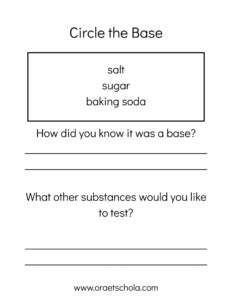
Here are some simple printables that I created to go along with the activity. They are good for early elementary students and preschoolers.
Click each to download.
Sharing is caring!